May 26, 2026
Connecting Activists 4,000 Miles Apart
Written by Dr. Susan Hinely, Climate Knowledge Collective (CKC)
Reposted with permission. Originally shared on March 12, 2026 as part of Vol. 1, Issue 1 of CKC's "Women the World Should Know" series.
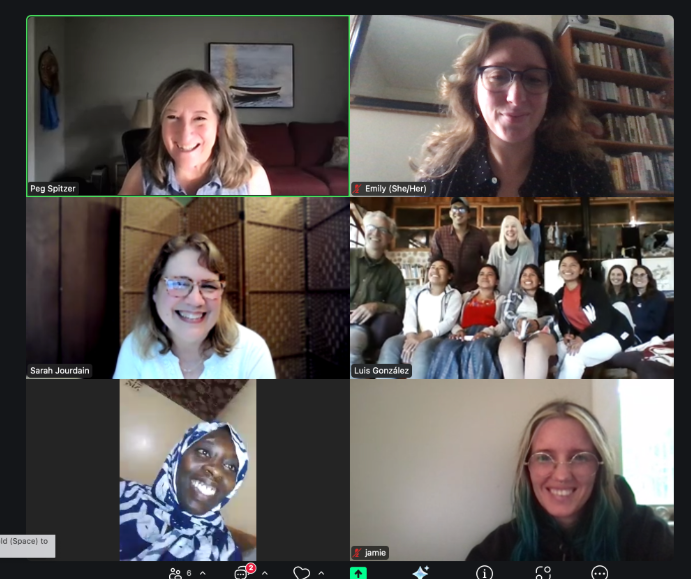
One of our chief goals at CKC is to provide a platform where climate activists can learn from and be inspired by each other. While our website and archive provide this opportunity, we seek ways to allow more direct communication between women facing comparable climate challenges. In honor of women’s history month, we’d like to share one story that captures the heart of our work: an exchange between young women climate activists in Senegal and Guatemala.*


Organizing the Exchange

Mutual Challenges
Despite these differences, the women found that the challenges they face and the work they do are quite similar. Both groups spend much of their time engaged in reforestation projects, including teaching communities the techniques and the benefits of rebuilding the native forest canopy. Soil regeneration is also a priority, though the specific plants and techniques used are different in the semi-arid Delta than in the tropical rainforest of Guatemala.
The women shared mutual frustration at the power of multinational corporations: large companies can pay more for environmentally disastrous export monoculture than Guatemalan farmers can make with traditional agriculture, while petroleum exploration and drilling is poisoning the water and the soil in Senegal.
Major Takeaways
Much of the conversation was spent sharing ways that each group tries to educate women and to encourage them to maintain traditional practices despite the growing pressure of foreign consumer products and habits. All the activists speak one or more indigenous languages, allowing them to communicate with village women whose lives are very different from theirs: of those in their twenties and early thirties, the same age as the activists, few had gone to school beyond age 8 or 10 and most already had multiple children, some of whom were already in their teens.
Encouraging women to grow and cook traditional foods was a common theme, for as Ixchel put it,
“if we lose our crops, we lose our cooking culture in itself, and then we lose our nutrition as a society.” [“Si perdemos los cultivos, perdemos nuestra gastronomía en sí y luego perdemos nuestra nutrición como sociedad.”]
Both groups talked about the disastrous consequences of mass migration, mostly men, out of their communities due to the climate crisis and environmental degradation.
Whether leaving Senegal for Spain or Guatemala for the United States, “when people migrate,” Ixchel noted, “they leave a family that depended on them.” [“Cuando las personas se migran, van solos, deja una familia, y esta familia de quien depende.”]
Helping Future Generations
Perhaps the most powerful aspect of the exchange was simply recognizing in each other, separated by an ocean and 7000 kilometers, kindred spirits who were defying traditional expectations to dedicate their lives to the preservation of their community and the environment.
“As women,” Sara said, “it can be very difficult to leave to go study and to seek opportunities.” [“Como mujeres, a veces cuesta bastante salir estudiar y buscar oportunidades.”]
Fatoumata agreed, saying
“I think we have to be able to wake up to something that is in us and that is sleeping.” [“Je pense que nous devons être capables de réveiller quelque chose qui est en nous et qui dort.]
Sara pointed out that while it was hard for them, their efforts made it easier for young women of the future, because
“to walk is to make a path. When someone opens opportunities for themselves, they open them for other generations, for the children who come after us.” [“Caminar es hacer camino. Porque abrir oportunidades para sí mismo, vienen nuevas generaciones, y ya vamos abriendo oportunidades para los niños que vienen detrás.”]
Their work was made easier by getting to know people committed to the same task, but in a different part of the world. Elsy summed it up by saying they were an inspiration to each other. [“Nuestra inspiración es conocer también personas de otros países que nosotros lo inspiremos a ellas.”]
Honoring and Acknowledging the Activists
The Climate Knowledge Collective is deeply honored to have witnessed this exchange. To ensure the voices of activists reach as many people as possible, we have transcribed these Zoom interviews into Spanish, French, and English—for the women who shared their stories and for all of you, our readers. To receive the transcripts, please contact us here.
Why This Exchange Matters — And Why Your Support Is Essential
When women climate leaders in Senegal and Guatemala connect, something powerful happens: Knowledge moves across borders without filters, hierarchies, or intermediaries.
These exchanges allow women who are already responding to climate change on the front lines to learn from one another—sharing strategies for restoring soil, sustaining local food systems, and strengthening their communities amid environmental and economic disruption.
Your support makes this possible. It allows the Climate Knowledge Collective to document lived experience, facilitate cross-cultural exchanges, and preserve these stories in accessible formats and languages. Rather than exporting solutions from the Global North, CKC invests in listening—amplifying local expertise and ensuring it is valued, archived, and shared.
In a world where climate narratives often are dominated by institutions and policymakers, your generosity helps center women whose knowledge is grounded in daily survival, care, and resilience. These are not abstract conversations. They are seeds for long-term change—cultivated through connection, trust, and shared learning.
CKC's focus is to revolutionize access to climate solutions by amplifying the lived realities of women and marginalized communities facing climate change. Through deep listening and collaboration, we tell their stories through oral histories & interactive storytelling projects."
*This article features testimonies from Ixchel Poou, Silvia Mez, Elsi Mucu, and Sara Caz— four young women who have particpated in Community Cloud Forest Conservation's WALC program. Your support of WALC is raising up a generation of bold and empowered environmental advocates.