Feb 11, 2026
All About Pongal
What is Pongal?
Taking place over four days in mid-January, Pongal is a harvest festival marking the lengthening days as the sun returns to the northern hemisphere. Its main themes are gratitude, joy, and togetherness.
Beginning in 200 BCE, it has had many different names throughout history, but it remains a popular holiday across all of India, including the Indian state of Tamil Nadu, where our Lutheran partners operate boarding homes. Each January, students and their families celebrate the festival.
The Rev. Jane Anitha, former manager of Siloam Boarding Home and a pastor in the Arcot Lutheran Church writes:
Pongal is a cultural festival in Tamil Nadu — and not a religious festival — as agriculture is the lifestyle of the land. Pongal is the festival of the farmers, thus it is also called “the Farmers’ Festival”. Further, as the factors that help farmers for their cultivation are all thanked, we may even call it “the Harvest festival.”
Pongal carries the cultural importance for Tamil people that Thanksgiving carries in the United States.
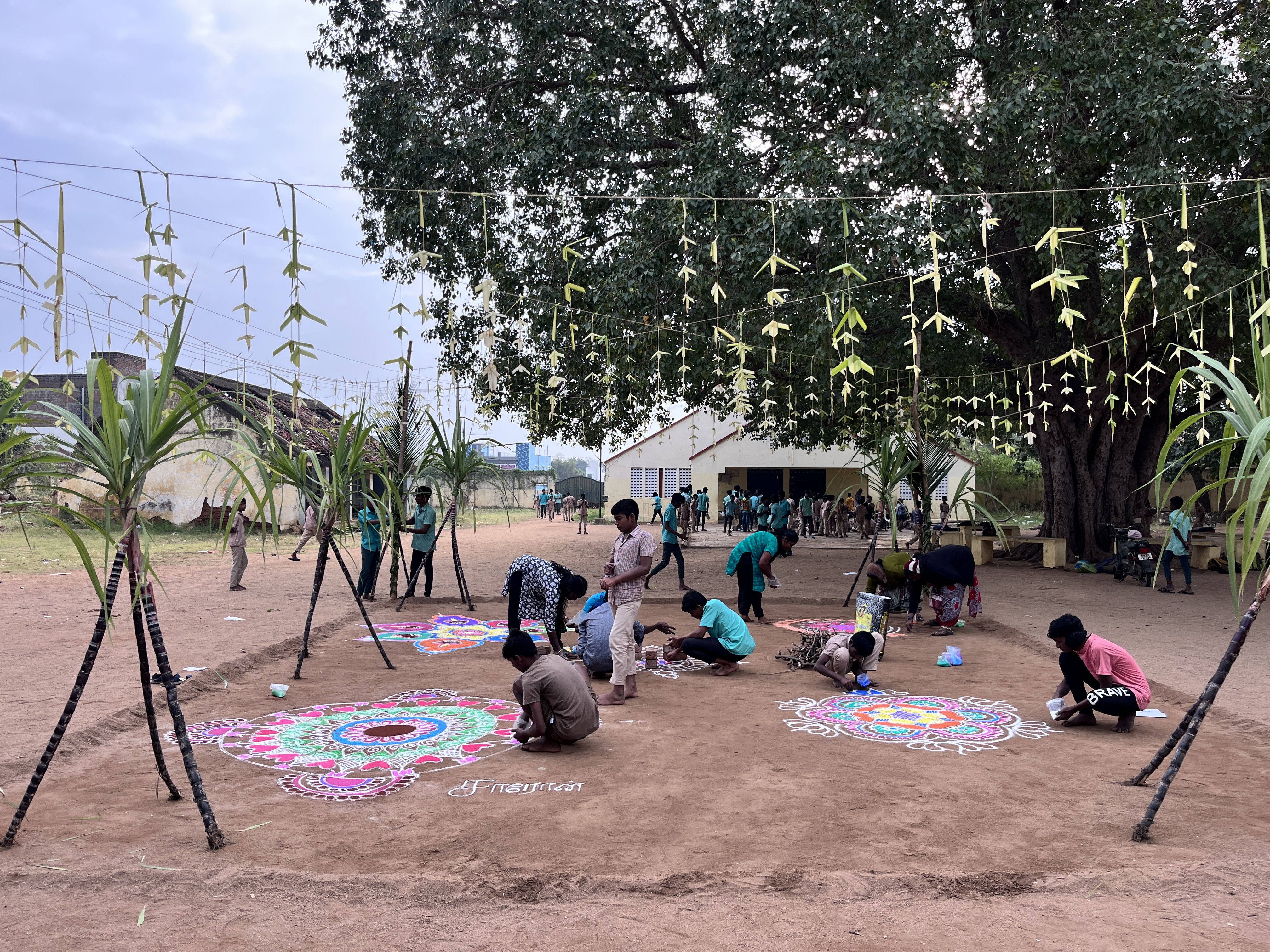
On the first day of Pongal, people traditionally spend the day cleaning their homes, discarding old possessions, and giving thanks for new ones. They may give their house a coat of fresh paint or add festive decorations. Rangoli kolams are beautiful geometric designs of rice flour typically made by women each sunrise in the dirt in front of the entrance to their homes, meant to bring prosperity.
On the second day, families gather together to share a meal. This day is considered the "main" day and includes the largest celebrations.
A central component of the celebrations is pongal, a decadent dish comprised of rice, jaggery, ghee, cashews, and cardamom. When the milk and rice flow over the pot, people shout, "Pongalo Pongal." This joyous Tamil chant means "may it boil over." It's a cultural expression of gratitude and hope for good fortune, and the rice boiling over the pot is a symbol of prosperity, abundance, and a bountiful harvest.
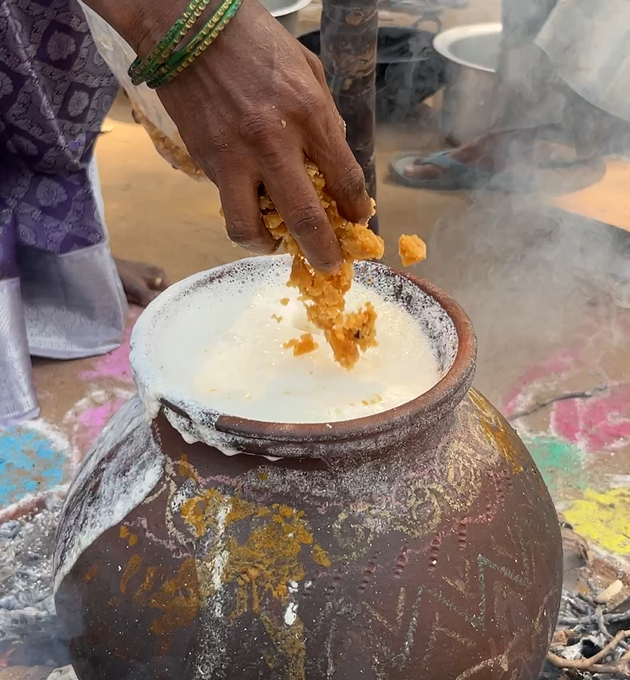
Jaggery - made from sugar cane or palm juice - is added to the pongal pot.
Day three is dedicated to giving thanks for cattle and all that cows give (e.g. dairy, fertilizer, wealth). Many people decorate their cows with garlands or painted horns.
The fourth and final day of Pongal is spent gathering with friends and families. Many family reunions happen on this day, and other community events are organized to strengthen ties to each other.
How do students celebrate?
Students celebrate Pongal in their boarding homes by cooking and eating sweet pongal and sugar cane, drumming, singing, dancing, making rangoli kolams, and giving thanks for all that has been given to them, including sponsors like you!
They will then return home to celebrate with their families and return to school the following week.
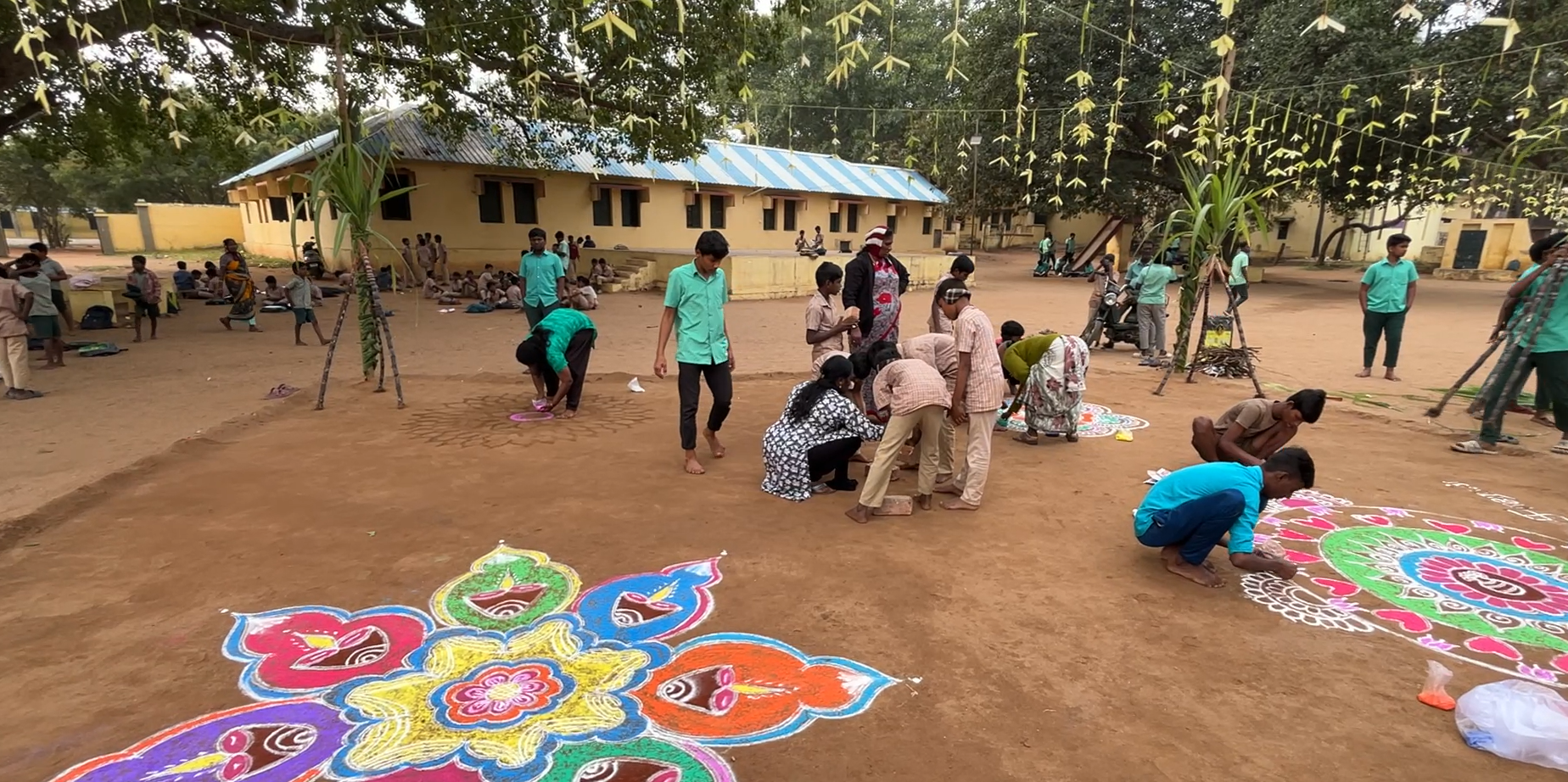
Students at Saron Boarding Home celebrate Pongal.