Aug 31, 2026
Teens Find Connection and Meaning at CCFC
From July 11-21, 2026, four adult chaperones, including LPGM trip leader Laura Feile, brought 11 teens (ages 14-18) on a Multi-Congregation Youth Trip to Guatemala.
The majority of the travelers came from two congregations, Normandale Lutheran Church in Edina, Minn., and Faith Lutheran Church in Shelton, Wash.
Over the course of their 11 day trip, the group of 15 travelers explored the Central Highlands of Guatemala – from experiential learning at LPGM partner Community Cloud Forest Conservation (CCFC)'s campus to scrambling around waterfalls and caves to basking in the clear turquoise water of Sacmoc.

Getting to CCFC
The adventure began with the four Washingtonians arriving in Guatemala City on Friday and staying overnight in Guatemala City. The Minneapolis group arrived the following day and were greeted with rain.
Rob Cahill, co-founder of CCFC, and a driver named Santiago met the group, and thus began the slow process of leaving Guatemala City.
While their van crawled along in bumper-to-bumper traffic, Rob shared information about Guatemala’s history, including the United States' involvement in the country's decades-long civil war, and referenced the documentary Finding Oscar.
Fortunately, the two groups gelled quickly and started getting to know each other on the ride. Purchasing bananas from street vendors helped raise morale during the long, rainy drive. The group also stopped for ice cream along the way, which was a tasty treat.

Luckily, many of the teens from Normandale Lutheran had already visited Holden Village, a remote wilderness community in the North Cascade Mountains of Washington State, so they were familiar with the idea of a long trek to reach a stunning, off-grid location.

CCFC's remote campus is about five hours from Guatemala City, so the group stopped in Baja Verapaz (about an hour from CCFC) to stay overnight.
After a rainy arrival at their accommodations, all enjoyed a good rest. The next morning, the group enjoyed a delicious breakfast at Ranchitos Del Quetzal and were very lucky to spot several of the restaurant's namesake perched high in the tree canopy before heading out on a hike. The quetzal is Guatemala's national bird and is the name of the country's currency. Surprisingly, however, many Guatemalans have never seen a quetzal.

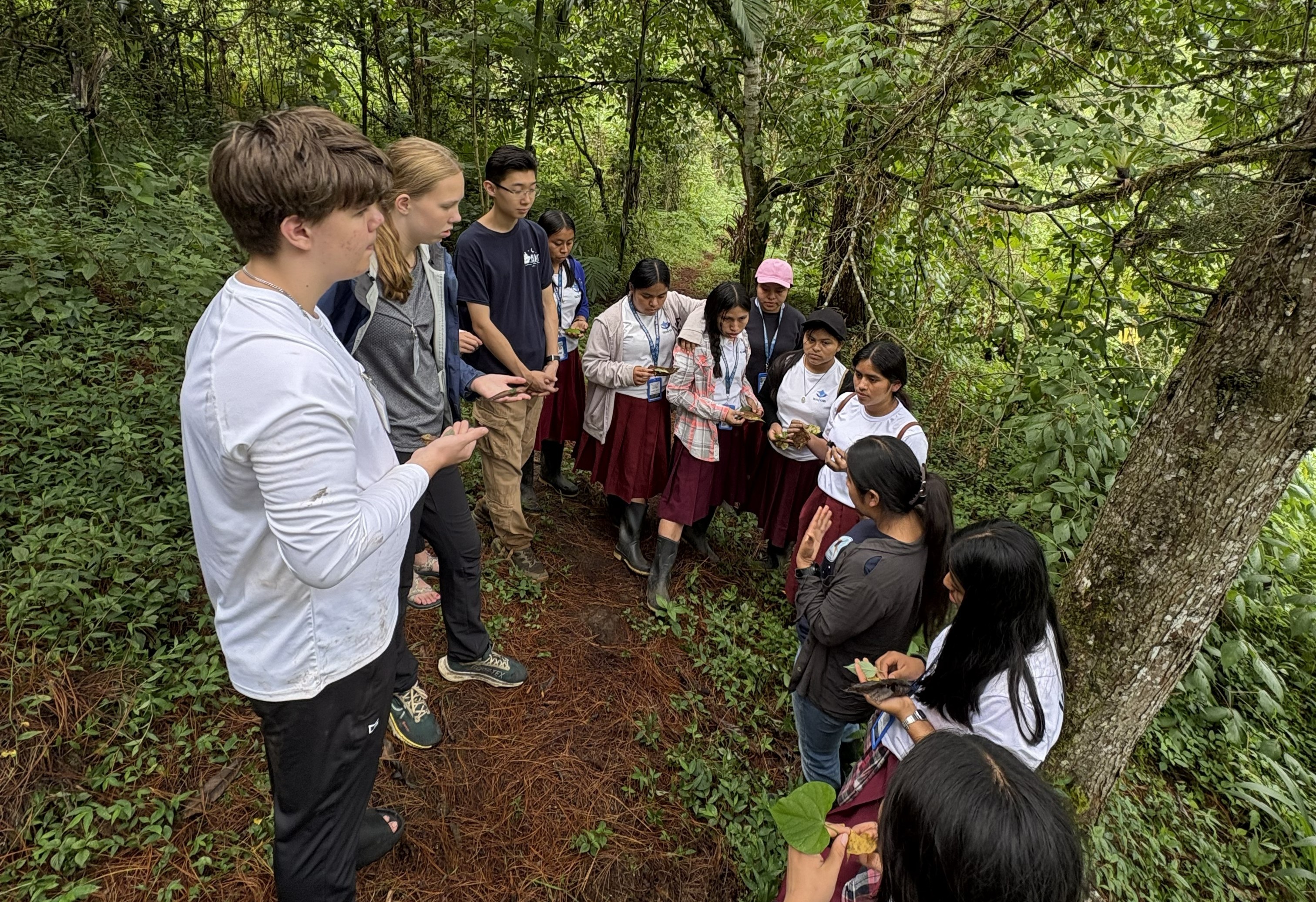
During the first hike, Rob shared tidbits about the local biodiversity.
They then traveled the final hour to CCFC's campus. For several of the teen travelers, this was their first time leaving the United States, and they chatted excitedly about the big adventure ahead and natural beauty that awaited them at CCFC.
CCFC works with Q'ecqchi' Maya communities in the Guatemalan highlands to provide academic scholarships and training in agroecology, contributing to food security, reforestation, and enhanced quality of life for the entire region.

Getting Acclimated to Off-Grid Living
After arriving on campus, they settled in, toured the facility, received an orientation, and rested after their exhausting travels.
An unexpected twist arrived in the form of power loss. CCFC generates its power through solar panels, and due to the overcast weather, the panels couldn’t generate enough power for the first few days at CCFC, providing the usually connected teens with an off-grid (and offline) experience.

It was also an adjustment to acclimate to "open air" living at CCFC, which involved sharing space with various critters. They also had to adjust to not having a dishwasher, but everyone took turns helping out on "K.P." duty.

Learning Daily Rhythms
It didn't take long for the travelers to acclimate to their new daily routine. After rising at 7:00 a.m., they would eat breakfast and then head from the "Quetzal Pequeno," the building where they slept, to the "Quetzal Grande," the biggest building on campus. The Quetzal Grande has a commercial-style kitchen, presentation room, and a demo kitchen room.
Throughout July, CCFC brings local students from nearby Catholic school Talita Kumi to their campus for learning opportunities. Between 80 and 100 new students arrive each day to cycle through four educational rotations taught by Women in Agroecology Leadership for Conservation (WALC) interns. According to Laura, "The students on the field trips were excited to be there and were very engaged in their learning."
Each morning, the LPGM travelers would split up and shadow the students as they moved through their rotations in small groups of 14 to 18 students.

The travelers would then share a snack of fruit or fortified oatmeal drink with the students after each morning session. The groups also merged for lunch, where they enjoyed tasty meals as well as mini English, Spanish, and Q'ecqchi' lessons by assuming the roles of both teachers and students.

After afternoon sessions with the visiting students, the group would enjoy unstructured or semi-structured downtime. They would often spend it observing, or assisting with, various tasks around CCFC.
They learned how to grind coffee by bike, bake banana cream pies, churn ice cream and make chocolate from scratch. They also helped the WALC interns prepare fresh meals with ingredients grown at CCFC.


Laura observed, "The staff are wonderful, and the WALC interns are lovely and friendly."
Evenings were spent eating dinner, playing spirited games of Uno No Mercy, or the group's favorite who-done-it "Murder in the Quetzal," and reflecting on the day's experiences. Sophie, a recent college graduate and soon-to-be Luther Seminary student, led each evening's reflection, which took place by candlelight.
During each reflection session, the travelers shared a high and low from the day, what they had observed, and processed various experiences, like meals, language barriers, and traffic.
Laura observed that the young people settled in over time and found more comfort in the space they were inhabiting.


Venturing Off Campus
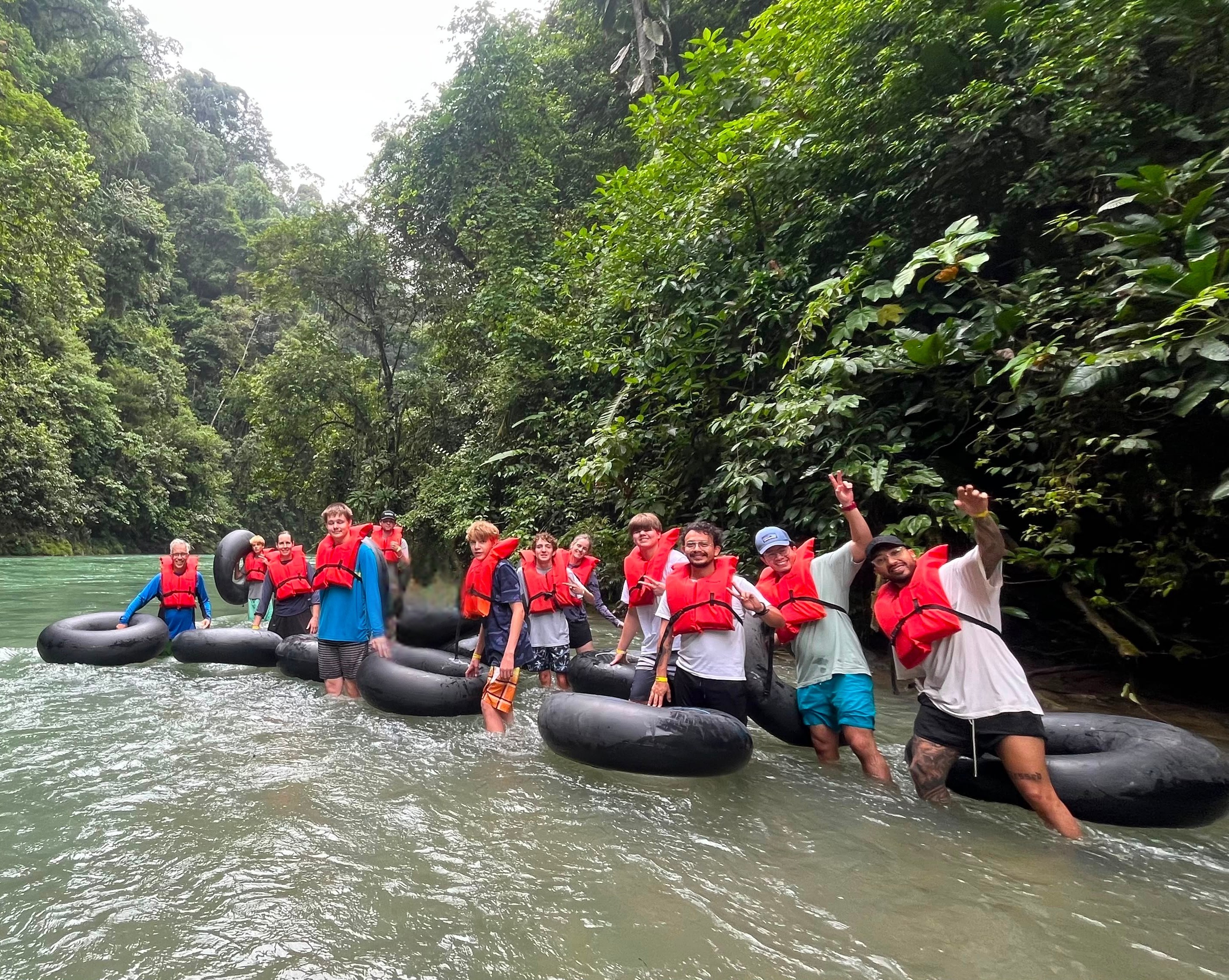
The group also went on a variety of excursions, including a village visit, coffee cooperative tour, worship service, ziplining, hikes, cave exploration, and river tubing.
The village visit stood out as a memorable experience. It was different from what many of the travelers expectedhe. They were surprised by its remote location. They couldn't imagine trying to get to school each day from the village.

They were given the opportunity to visit a traditional Qʼeqchiʼ Maya home when they met a single mother and weaver whose daughter attended WALC. While they had to hike from the road to reach her house, they felt grateful to be welcomed into her home.
Rob explained traditional weaving, and they were impressed by the commitment to maintaining cultural ties.
Laura especially appreciated "getting a grounding [on] where the [WALC] students come from. It helped us better understand day-to-day life, and there were moments where I think we all realized, 'Wow, this is a hard lifestyle.’”

At one point, a tiny kitten sat on the boot of one of the teens, much to the delight of everyone.

Exploring Finca Sacmoc
After several full days at CCFC, the group traveled to Finca Sacmoc, a protected area with rich biodiversity, caves, waterfalls, and clear water. It's only about 20 miles from Cobán, the closest city to CCFC. There, they enjoyed quiet time in nature.
Reflections
The group left Guatemala on July 21, bursting with new knowledge and experiences and deeper cultural appreciation.
Laura summarized her experience as, "CCFC is a place where an LPGM traveler can be challenged in many ways. Sure, there are language barriers, lush and uneven terrain, and creepy crawly critters that come with the natural beauty of it all. But the memories we made here will last a lifetime. It was truly a pleasure to bring such a great group of youth to CCFC to see it firsthand."
One young person shared, "I learned that sometimes stepping outside of my comfort zone can lead to great experiences and memories. The most challenging part was the language barrier. I learned to be more patient and try different ways to communicate and understand others."
They continued, "It has inspired me to make more of an effort to include others, especially those who speak a different language, and help them feel welcome in my community."
Another teen traveler explained, "I learned what it looks like to live sustainably and not produce a lot of waste. This trip has inspired me to keep working toward a future that includes and uplifts women and girls."
Explore 2027 Trips to Guatemala
